

Most adults can name their blood pressure trend, their cholesterol numbers, or their last eye prescription. Far fewer can describe the state of their hearing, even though it shapes daily life just as much. That gap exists partly because hearing testing has long been treated as something to do after a problem appears rather than before.
A baseline hearing test flips that timing. It captures how well a person hears at a specific point, across the full range of frequencies and speech sounds, and creates a record that future tests can be compared against. The real value usually arrives later, sometimes years later, when subtle changes that would otherwise go unnoticed become visible against the original measurements. Anne Arundel ENT & Facial Plastic Surgery considers baseline testing one of the quietest but most useful pieces of preventive care available for patients in Annapolis and Severna Park, MD, precisely because its benefits compound silently over decades.
What Is a Hearing Baseline?
A hearing baseline is a comprehensive record of an individual’s hearing ability at a specific moment in time. It measures how well different frequencies and speech sounds are detected and processed.
The results provide detailed information about hearing sensitivity across a range of pitches and volumes. Even if hearing appears completely normal, these measurements create an important benchmark for future comparison.
Learning more about full audiology testing can help patients understand how hearing baselines are established and why they serve as an important part of preventive hearing care.
Why Hearing Changes Often Go Unnoticed
Unlike some medical conditions that produce sudden symptoms, hearing loss often develops gradually. Small changes may occur over several years, making them difficult to recognize in everyday life.
The brain adapts remarkably well to subtle hearing changes. Individuals may unconsciously rely more on visual cues, context, or increased concentration during conversations without realizing their hearing has changed.
Because the adjustment happens gradually, many people do not notice a decline until communication becomes significantly more difficult.
A baseline hearing test helps reveal these changes by providing an objective point of comparison.
Comparing Hearing Over Time
One of the greatest advantages of a baseline hearing test is the ability to compare future results against earlier measurements.
Without previous testing, it can be difficult to determine whether hearing changes have occurred gradually or recently. A baseline provides a clear picture of where hearing started, allowing audiologists to identify even subtle shifts over time.
This comparison can help determine whether hearing remains stable or whether changes are occurring that may warrant further evaluation.
The ability to track hearing trends over many years is one of the most valuable aspects of preventive hearing testing.
Early Detection of Hearing Loss
Hearing loss often begins long before symptoms become obvious. In many cases, early changes affect high-frequency sounds that are important for speech clarity.
Because individuals may still hear voices adequately, they often do not recognize that certain speech sounds are becoming more difficult to understand.
Understanding conditions such as hearing loss helps explain why early identification is important. Detecting changes sooner allows patients to better understand how hearing is evolving and monitor their hearing health more effectively.
A baseline hearing test creates the foundation for this early detection process.
Monitoring Noise Exposure
Many adults experience regular exposure to loud sounds through work, hobbies, travel, concerts, sporting events, or recreational activities.
Noise exposure can gradually affect hearing over time, often without immediate symptoms. A baseline hearing test provides a reference point that helps determine whether exposure is contributing to measurable hearing changes.
This information can be especially valuable for individuals working in noisy environments or participating in activities that involve repeated sound exposure.
Tracking hearing over time allows changes to be identified before communication difficulties become severe.
Supporting Future Treatment Decisions
A baseline hearing test may also become valuable if hearing treatment is needed later in life.
When hearing changes occur, previous test results help audiologists understand the rate and pattern of hearing loss. This information may assist in determining the most appropriate recommendations moving forward.
Learning more about hearing aid dispensing and maintenance helps illustrate how hearing evaluations and hearing technology work together to support long-term hearing health.
Having access to previous hearing data often provides a more complete picture of a patient’s auditory history.
Hearing and Overall Health
Hearing health is closely connected to overall quality of life. Communication plays an important role in relationships, social engagement, workplace interactions, and daily activities.
Because hearing changes often develop gradually, routine monitoring helps individuals remain aware of how their hearing is functioning over time.
A baseline test does not simply document hearing ability—it creates a valuable health record that can support future care and decision-making.
Like many aspects of preventive healthcare, the greatest value may not become apparent until years later.
Who Should Consider Baseline Testing?
Many adults assume hearing testing is only necessary for older individuals. In reality, establishing a baseline can be beneficial at nearly any adult age.
Baseline testing may be particularly valuable for:
- Adults over age 40
- Individuals with a family history of hearing loss
- People exposed to occupational or recreational noise
- Those experiencing tinnitus or ringing in the ears
- Individuals who simply want a record of their current hearing health
The earlier a baseline is established, the more useful it becomes for long-term comparison.
What Happens During a Baseline Hearing Evaluation?
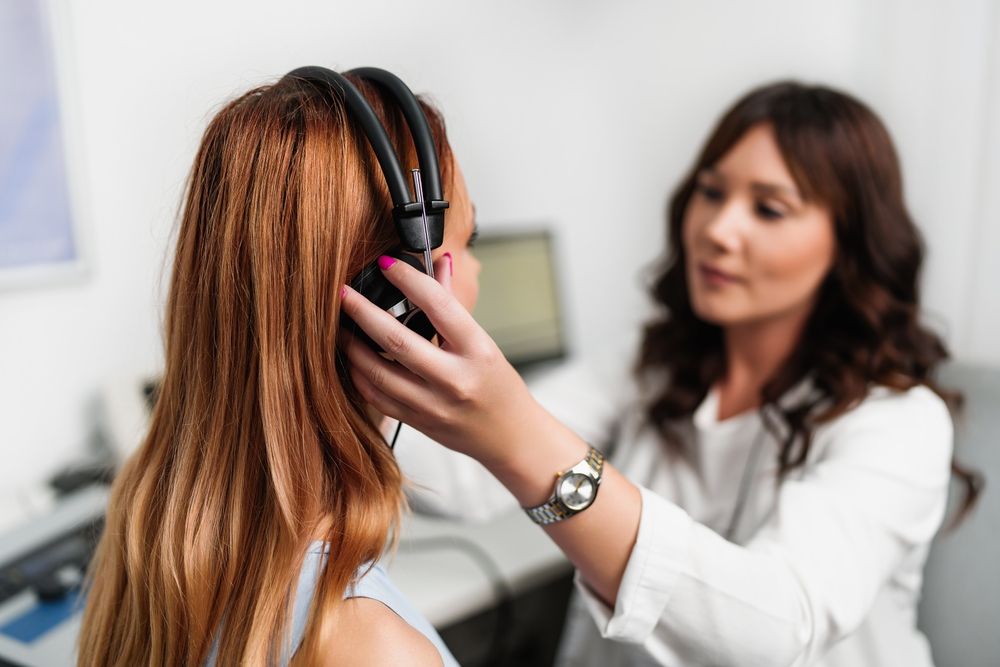
A baseline hearing evaluation is noninvasive and typically includes several components designed to assess hearing sensitivity and speech understanding.
Audiologists measure how well sounds are detected across multiple frequencies and evaluate how clearly speech is understood. Additional testing may be performed depending on individual needs and symptoms.
The results provide a detailed picture of hearing function that can be stored and compared with future evaluations.
This information becomes increasingly valuable as years pass and hearing health continues to evolve.
Understanding the Long-Term Value of a Hearing Baseline
The real value of a hearing baseline often arrives years after the test itself. A subtle shift in high-frequency sensitivity that would be invisible without comparison becomes obvious next to an earlier audiogram. A pattern of change connected to noise exposure, family history, or aging becomes traceable rather than guessed at. Treatment decisions, when they eventually become relevant, can be guided by data rather than starting from scratch.
None of this requires that hearing be actively declining at the time of testing. In fact, the most useful baselines are usually established before anything has changed, when the results read as unremarkable and the appointment feels almost unnecessary. That apparent unimportance is exactly the point. Anne Arundel ENT & Facial Plastic Surgery offers this kind of preventive perspective to patients across Annapolis and Severna Park, MD, where a single quiet appointment in a sound booth often becomes one of the more useful records a person carries into the second half of life.
Sources
World Health Organization. (2021). World Report on Hearing.
American Academy of Audiology. (2023). Adult hearing screening and monitoring recommendations.
Humes, L. E. (2013). Understanding age-related changes in hearing. American Journal of Audiology.