
Hearing changes often appear gradually, which is why many adults in their 40s and 50s miss the earliest signs. You might notice yourself turning up the TV, struggling to follow conversations in noisy places, or feeling more tired after social interactions. While these shifts can seem minor, they may be among the earliest indicators of hearing loss. This guide explains what to look for, why hearing changes often begin in midlife, and how evaluation supports long-term hearing wellness. Anne Arundel ENT & Facial Plastic Surgery in Severna Park and Annapolis provides educational insight for individuals and families across the region, including Baltimore.
Why Hearing Loss Often Begins in Midlife
Although hearing loss is commonly associated with older age, early changes frequently begin during the 40s and 50s. Over time, the delicate structures of the inner ear naturally become less efficient. Combined with a lifetime of sound exposure, genetics, and general health factors, many adults start noticing difficulty understanding speech—especially in environments with background noise.
In the early stages, the brain often compensates for reduced hearing, which is why many people do not immediately recognize the changes. They may slowly adjust their listening habits, avoid noisy venues, or rely more heavily on visual cues without realizing their hearing is declining.
A reliable way to understand whether these subtle changes are occurring is through full audiology testing, which evaluates hearing sensitivity across a range of frequencies. High-frequency hearing tends to decline first, making consonants harder to distinguish. This is why words may sound muffled or unclear, even though voices still seem loud enough.
Occasionally, early hearing changes are mistaken for other issues, such as ear congestion or pressure. Although congestion can temporarily affect hearing, consistent or progressive difficulty understanding speech is more likely related to early hearing loss.
Common Early Signs of Hearing Loss in Your 40s and 50s
The following symptoms are among the most common early indicators. Many people experience them for months—or even years—before recognizing the connection to hearing health.
Difficulty Hearing in Background Noise
Restaurants, family gatherings, office spaces, and other busy environments may feel more challenging than they once did. You might hear that someone is speaking, but struggle to understand the words clearly.
Turning Up the Volume
Needing higher TV or radio volume than those around you is often one of the earliest and most noticeable signs. Loved ones may also comment on how loud things sound.
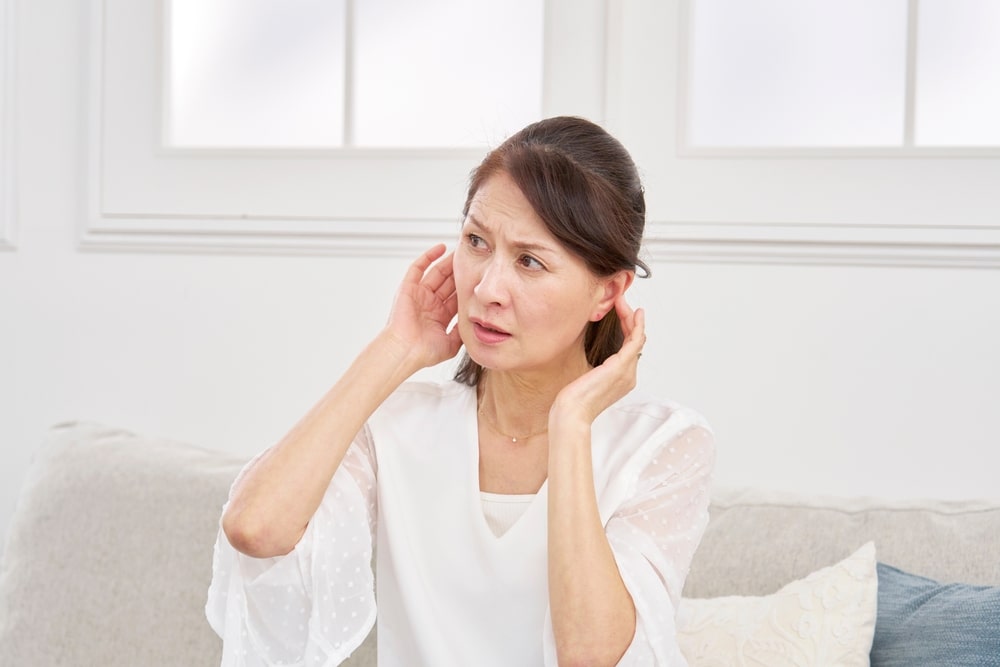
Asking Others to Repeat Themselves
If you find yourself frequently saying “What?” or “Can you repeat that?” you may be missing essential speech details—especially high-frequency consonants.
Speech Sounds Muffled or Unclear
Many adults describe early hearing loss as difficulty understanding rather than difficulty hearing. Learning about common hearing loss symptoms can help clarify whether your experiences align with early auditory changes.
In some cases, fatigue or frustration after conversations may develop as your brain works harder to fill in missing information. This mental strain is a hallmark of early hearing changes.
Why Early Detection Matters
Detecting hearing loss early can make a meaningful difference in communication and long-term quality of life. When hearing loss goes unrecognized, the brain receives less auditory input over time, which can make speech comprehension more difficult even when sound levels increase.
Some individuals also begin to notice ringing, buzzing, or humming sounds in their ears. Exploring tinnitus evaluation and management can help clarify the connection between tinnitus and early hearing changes.
Practical Tips for Protecting Your Hearing in Midlife
Healthy hearing habits are valuable at any age, but they are especially important in midlife, when early hearing changes often begin. These tips help reduce strain and protect long-term auditory wellness:
• Limit exposure to loud environments whenever possible.
• Wear ear protection during concerts, construction projects, yardwork, or recreational shooting.
• Take quiet breaks throughout the day, especially in consistently noisy environments.
• Monitor symptoms like ringing or buzzing, which may suggest auditory stress.
• Maintain healthy blood pressure, blood sugar, and cardiovascular wellness.
• Consider regular hearing evaluations to monitor changes over time.
When to Consider a Hearing Evaluation
A hearing evaluation is helpful whenever you notice persistent hearing changes. Many adults schedule an evaluation when communication becomes more frustrating, when loved ones comment on volume levels, or when symptoms begin to interfere with daily life.
However, sudden or rapid changes require immediate attention. Learning about the warning signs of sudden hearing loss ensures you know when prompt evaluation is especially important.
Because the inner ear also plays a role in balance, some individuals experiencing early hearing changes may also notice dizziness or unsteadiness.
Conclusion
Hearing changes during your 40s and 50s are common, but early awareness can make a meaningful difference in long-term communication and confidence. By recognizing subtle symptoms—such as turning up the TV, struggling in busy environments, or feeling fatigued after conversations—you can better understand when further evaluation may be useful. Anne Arundel ENT & Facial Plastic Surgery in Severna Park and Annapolis offers educational resources for individuals and families across the Baltimore region. Staying attentive to early hearing shifts allows you to remain connected, engaged, and confident throughout every stage of life.
Sources
Lin, F. R., et al. (2013). Hearing loss and cognitive decline in older adults. JAMA Internal Medicine.
Goman, A. M., & Lin, F. R. (2016). Prevalence of hearing loss by age in adults in the United States. American Journal of Public Health.
Mener, D. J., et al. (2013). Hearing loss and depression in older adults. The Journals of Gerontology.