

Hearing aid technology has advanced significantly in recent years, offering users more options than ever before. One of the most common decisions individuals face when exploring hearing aids is whether to choose rechargeable models or those powered by traditional disposable batteries. Both options are widely used and designed to support hearing needs effectively, but they differ in how they are powered and maintained.
Understanding the differences between rechargeable and battery-powered hearing aids can help clarify which option may best align with daily routines and personal preferences. Factors such as convenience, travel habits, dexterity, and comfort with technology all play a role in this decision. Anne Arundel ENT & Facial Plastic Surgery serves patients in Annapolis and Severna Park who want to better understand hearing aid options and how different features may support long-term hearing care.
How Traditional Hearing Aid Batteries Work
Traditional hearing aids typically use small disposable zinc-air batteries. These batteries are activated when a protective tab is removed, allowing air to enter the battery and begin generating power.
Once activated, the battery powers the hearing aid’s components, including the microphone, amplifier, and speaker. Depending on usage and device settings, these batteries may last several days to a couple of weeks before needing replacement.
Disposable hearing aid batteries are available in standardized sizes, often identified by color-coded packaging. Many users become familiar with replacing batteries as part of their regular routine, keeping spare batteries available to ensure uninterrupted use.
While this system is reliable, handling small batteries can sometimes be challenging, particularly for individuals with limited dexterity or vision concerns.
What Are Rechargeable Hearing Aids?
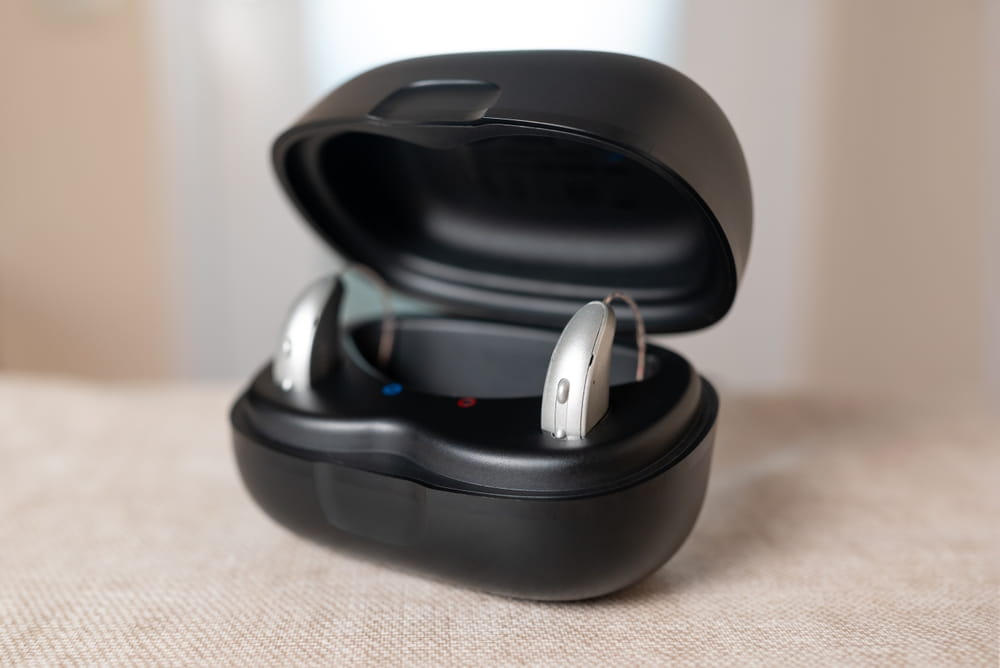
Rechargeable hearing aids use built-in lithium-ion batteries instead of disposable ones. These devices are designed to be placed in a charging unit when not in use, typically overnight.
The charging process is similar to other electronic devices such as smartphones. Most rechargeable hearing aids reach a full charge within a few hours and are designed to last throughout the day on a single charge.
Because the battery is integrated into the device, there is no need to open a battery compartment or replace small batteries. This streamlined process has contributed to the growing popularity of rechargeable hearing aids.
Learning about options such as hearing aid dispensing and maintenance can help patients better understand how different hearing aid systems are maintained and supported over time.
Benefits of Rechargeable Hearing Aids
Rechargeable hearing aids offer several advantages that appeal to many users. One of the most notable benefits is convenience. Instead of replacing batteries regularly, users simply place their hearing aids in a charger at the end of the day.
This feature can be particularly helpful for individuals who prefer a simplified routine. Charging the device overnight becomes part of a daily habit, reducing the need to manage spare batteries.
Rechargeable models may also be easier for individuals who have difficulty handling small objects. Eliminating the need to open battery compartments or insert tiny batteries can make daily use more manageable.
Another advantage is reduced environmental impact. Because rechargeable hearing aids do not rely on disposable batteries, they generate less waste over time.
Many modern rechargeable devices are also designed to support advanced features such as wireless streaming and noise reduction while maintaining consistent battery performance throughout the day.
Benefits of Disposable Battery Hearing Aids
Disposable battery hearing aids remain a popular option and offer several benefits as well. One of the key advantages is flexibility. If a battery runs out during the day, it can be quickly replaced with a new one, allowing the device to continue functioning immediately.
This can be especially useful during travel or situations where access to a power source may be limited. Carrying spare batteries ensures that hearing aids remain operational without the need for charging equipment.
Disposable battery models may also be preferred by individuals who are accustomed to traditional hearing aid systems and feel comfortable managing battery replacements.
In some cases, certain hearing aid styles or power requirements may still rely on disposable batteries, particularly for devices that require higher energy output.
Comparing Daily Convenience
When comparing rechargeable and disposable battery hearing aids, daily convenience is often one of the most important considerations.
Rechargeable hearing aids simplify the daily routine by eliminating the need for battery replacement. Users can develop a consistent habit of placing their hearing aids in a charger each night, ensuring they are ready for use the next day.
On the other hand, disposable batteries offer immediate replacement when power runs low. This can be beneficial for individuals who prefer not to rely on charging schedules or who may have unpredictable routines.
The choice between these options often depends on whether a person prefers a charging routine or the flexibility of replacing batteries as needed.
Travel and Lifestyle Considerations
Lifestyle plays a significant role in determining which hearing aid option may be more practical. Individuals who travel frequently may consider how each option fits into their routine.
Rechargeable hearing aids require access to a charging unit and a power source. While many chargers are compact and portable, they still require planning when traveling.
Disposable batteries, by contrast, can be easily carried and replaced anywhere. This may provide added convenience during long trips or in locations where charging access is limited.
Daily habits also influence this decision. Individuals who already charge devices such as smartphones or tablets each night may find rechargeable hearing aids fit naturally into their routine.
Maintenance and Longevity
Both rechargeable and disposable battery hearing aids require regular care to function properly. Keeping the devices clean and protecting them from moisture helps maintain performance over time.
Rechargeable batteries are designed to last for several years before they may need replacement. Over time, battery capacity may gradually decrease, similar to other rechargeable electronics.
Disposable batteries require more frequent replacement but do not depend on long-term battery capacity. As long as new batteries are available, the device can continue functioning as expected.
Routine maintenance and periodic evaluation help ensure that hearing aids continue to operate effectively regardless of the battery type.
Choosing the Right Option for Your Needs
Selecting between rechargeable and disposable battery hearing aids involves considering individual preferences, daily routines, and lifestyle factors.
Some individuals prefer the simplicity and ease of rechargeable devices, while others value the flexibility and reliability of disposable batteries. There is no single option that is best for everyone, as each approach offers distinct advantages.
Understanding how each system works can help individuals make informed decisions about hearing aid technology and how it fits into their daily life.
Anne Arundel ENT & Facial Plastic Surgery serves patients in Annapolis and Severna Park who want to better understand hearing aid options, including the differences between rechargeable and battery-powered models, and how these choices may align with individual lifestyles and hearing needs.
Sources
Dillon, H. (2012). Hearing Aids. Thieme Medical Publishers.
Bentler, R., & Wu, Y. (2018). Modern hearing aid technologies. Trends in Amplification.
McPherson, B. (2016). Innovations in hearing aid technology and rehabilitation. International Journal of Audiology.