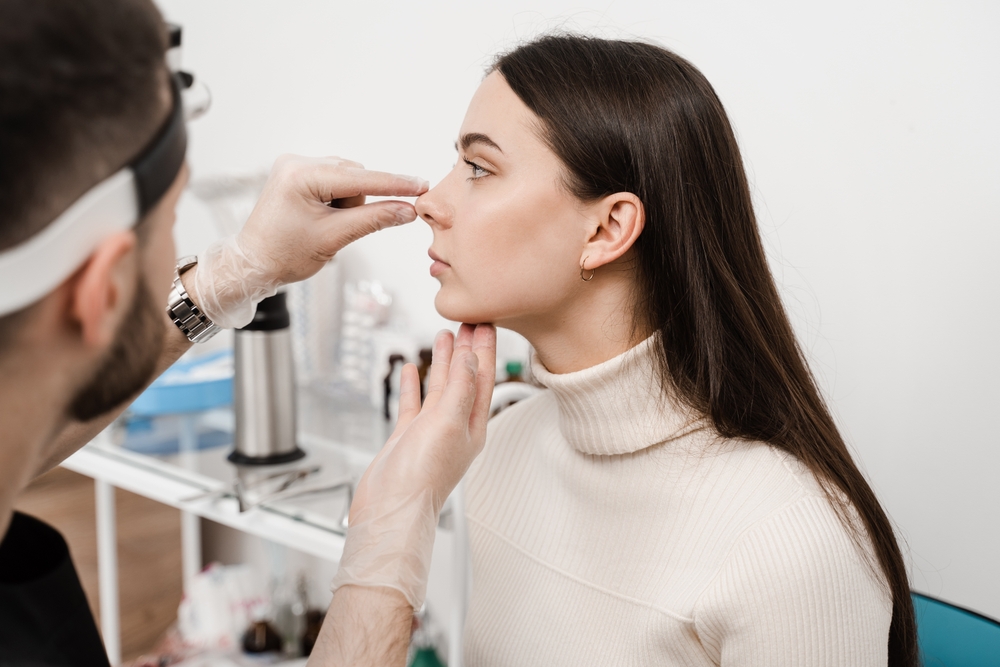
While primary rhinoplasty can deliver transformative results, not every patient achieves their desired outcome the first time. Whether due to cosmetic dissatisfaction, breathing difficulties, or healing complications, some individuals require a second procedure known as revision rhinoplasty. As one of the most technically demanding facial plastic surgeries, revision rhinoplasty presents unique challenges that require a specialized, highly skilled surgeon. In this blog, we’ll explore the common reasons patients seek secondary nose surgery, the complexities surgeons face, and the innovative solutions that make success possible.
In This Blog:
- Common Reasons for Revision Rhinoplasty
- Challenges in Revision Rhinoplasty
- Key Solutions and Surgical Techniques
- What to Expect During the Revision Process
- The Importance of Choosing a Skilled Facial Plastic Surgeon
Common Reasons for Revision Rhinoplasty
Patients seek revision rhinoplasty for a variety of reasons, often a mix of functional and aesthetic concerns:
- Aesthetic dissatisfaction: Some patients are unhappy with the shape or proportions of their nose after the initial surgery. Common complaints include a drooping or overly upturned nasal tip, persistent dorsal hump, or asymmetry.
- Breathing difficulties: Structural changes made during the first procedure may lead to obstruction of the nasal passages, resulting in chronic congestion or difficulty breathing through the nose.
- Poor healing or scarring: Excess scar tissue, poor wound healing, or unpredictable cartilage behavior can lead to irregularities that become more noticeable over time.
- Injury after surgery: Trauma to the nose after the initial healing process can undo previous surgical results and create new deformities.
Challenges in Revision Rhinoplasty
Secondary rhinoplasty is inherently more complex than primary rhinoplasty. Some of the most significant challenges include:
- Scar tissue and altered anatomy: Previous surgery creates internal scarring and changes to the nasal structure that make it harder to navigate and reshape the nose.
- Cartilage depletion: The cartilage from the nasal septum, typically used in primary surgery, may have already been removed or reshaped, limiting available grafting material.
- Weakened support: Over-resection during the initial surgery can compromise the structural integrity of the nose, making it more prone to collapse or distortion.
- Higher expectations: Patients undergoing revision often feel discouraged and frustrated. This emotional component adds pressure to deliver highly customized, precise results.
Key Solutions and Surgical Techniques
Addressing these challenges requires both creativity and experience. Skilled facial plastic surgeons use a variety of strategies to restore both form and function:
- Cartilage grafting: To rebuild lost structure, surgeons may harvest cartilage from the patient’s ear or rib if septal cartilage is unavailable. These grafts are shaped and placed to provide long-lasting support.
- Structural grafts: Spreader grafts, alar batten grafts, and columellar struts are often used to reinforce the nasal framework and correct deformities.
- Open surgical approach: Most revision rhinoplasty procedures are performed with an open technique to provide maximum visibility and control during surgery.
- Functional correction: Revision surgery often includes repairing the nasal septum or internal nasal valves to improve airflow and breathing.
- Preoperative imaging and planning: High-resolution imaging and 3D modeling help map the nasal anatomy and plan for precise changes during surgery.
What to Expect During the Revision Process
If you’re considering revision rhinoplasty, it’s important to be fully informed about the process:
- Comprehensive consultation: A detailed review of your medical and surgical history is essential. Your surgeon will assess both the internal and external nasal anatomy to determine what is feasible.
- Surgical planning: Due to the complexity of revision cases, planning is often more extensive than in a primary procedure. Expect in-depth discussions and potential imaging.
- Surgical time and recovery: Revision surgeries typically take longer than primary rhinoplasties and may have a longer healing period due to more extensive work.
- Realistic expectations: While excellent results are achievable, patients should understand that perfection may not be possible, and small asymmetries can still occur.
The Importance of Choosing a Skilled Facial Plastic Surgeon
Revision rhinoplasty demands a high level of precision, artistry, and surgical expertise. When selecting a surgeon, look for:
- Board certification in facial plastic and reconstructive surgery
- Experience specifically in revision rhinoplasty cases
- Before-and-after photos that demonstrate success in similar cases
- Clear communication and a personalized treatment plan
- Positive patient testimonials reflecting both outcomes and care
Choosing the right surgeon is often the most critical factor in achieving a successful outcome.
Conclusion
Revision rhinoplasty is one of the most intricate procedures in facial plastic surgery, but it also offers the opportunity to restore confidence, improve breathing, and refine nasal aesthetics. With a thoughtful approach and the guidance of a skilled surgeon, patients can achieve satisfying results even after a disappointing initial experience. If you’re considering secondary nose surgery, take the time to explore your options with a qualified expert who understands both the technical and emotional aspects of your journey.
Looking for a trusted facial plastic surgeon for revision rhinoplasty?At Anne Arundel ENT & Facial Plastic Surgery, our board-certified specialists offer expert care and personalized treatment plans to help you breathe better and feel confident again. Contact us today to schedule your consultation.